Did you know that roof inspections can be made significantly safer and more efficient with the right technology? In 2026, the use of drones for roof inspections has moved from a novelty to a standard practice, revolutionizing how professionals assess building exteriors. A survey from the National Association of Home Inspectors (NAHI) indicated that over 70% of their members are now utilizing drones for at least some of their inspection tasks, a figure that has more than doubled in the past three years. This shift is driven by the need for accuracy, safety, and comprehensive data gathering.
For home inspectors, choosing the right drone is crucial. It’s not just about having a flying camera; it’s about selecting a tool that provides clear imagery, reliable flight performance, and the necessary features to capture detailed information about a roof’s condition. This article explores the leading drones professionals are using today, the features that make them suitable for roof inspections, and what inspectors actually look for when making their selection.
Why Drones are Essential for Modern Roof Inspections
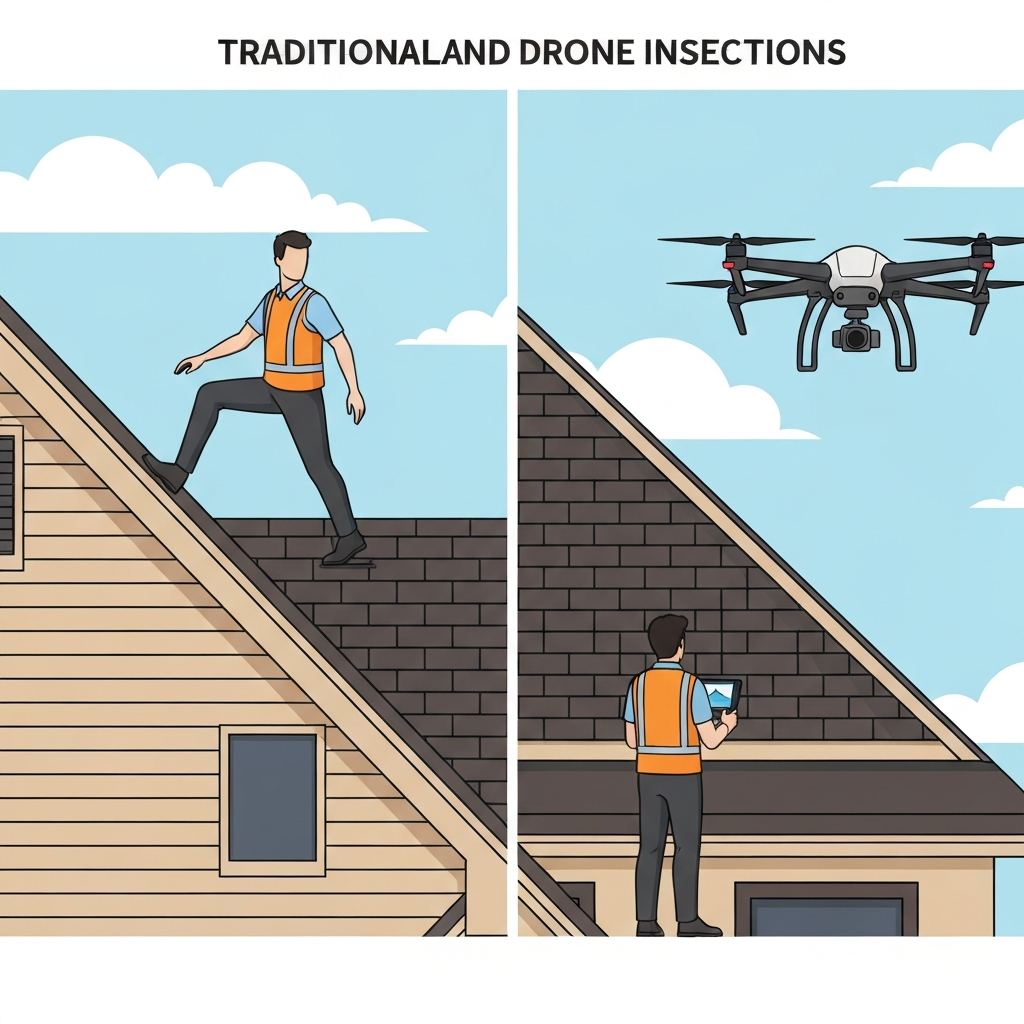
Traditional roof inspections often involve physically walking on the roof, which poses significant safety risks. Falls from roofs can lead to severe injuries or fatalities. Drones offer a compelling alternative by allowing inspectors to capture high-resolution images and videos from a safe distance.
Beyond safety, drones provide several advantages:
- Comprehensive Coverage: Drones can easily access and document all areas of a roof, including hard-to-reach sections, steep slopes, and complex architectural features that might be missed during a manual inspection.
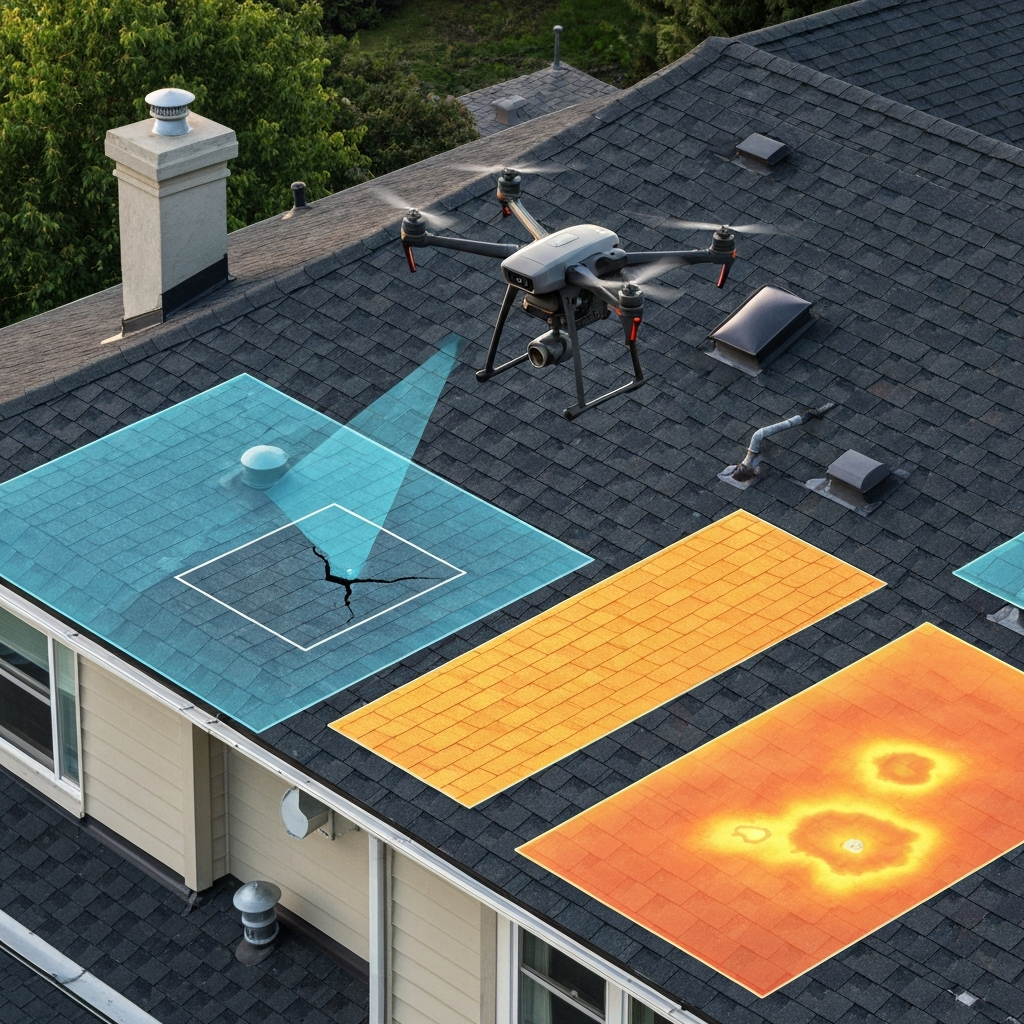
- Detailed Imaging: Equipped with high-resolution cameras, including zoom capabilities and thermal imaging sensors, drones can detect subtle issues like cracked shingles, damaged flashing, water pooling, or areas of poor insulation that might not be visible from the ground or even up close.
- Efficiency: Inspecting a roof with a drone can often be completed much faster than a traditional method, saving time for both the inspector and the homeowner.
- Documentation: Drone footage provides excellent visual evidence of a roof’s condition, which is invaluable for repair quotes, insurance claims, and client reports. This visual record can also track changes over time.
- Reduced Property Damage: Walking on a roof can sometimes cause damage to shingles or other roofing materials. Drones eliminate this risk entirely.
The Federal Aviation Administration (FAA) has established regulations for commercial drone use, including requirements for pilot certification and operational guidelines. Understanding and adhering to these regulations is paramount for any professional using drones for inspections. FAA’s Drone Zone provides comprehensive information on these rules.
Key Features Inspectors Look For in a Roof Inspection Drone
When selecting a drone for professional roof inspections, certain specifications and features are non-negotiable. John Sisto, the expert home inspector behind Tampa Home Inspections, emphasizes that the drone is a tool to gather data accurately and safely. “We need a drone that can handle varying weather conditions, capture crystal-clear images even from a distance, and be reliable during flight,” Sisto states.
Here are the critical features inspectors prioritize:
1. Camera Quality and Capabilities
This is arguably the most important feature. A drone for roof inspections needs a camera that can capture fine details.
- High Resolution: A minimum of 12 megapixels is standard, but 20 megapixels or higher is preferable for sharp, detailed images.
- 4K Video Recording: This provides smooth, high-definition video footage, allowing for close examination of roofing materials in playback.
- Optical Zoom: The ability to zoom optically (without losing image quality) is essential for inspecting specific areas of concern without needing to fly the drone extremely close. A 3x or 5x optical zoom is highly beneficial.
- Gimbal Stabilization: A 3-axis gimbal is crucial for smooth, stable footage and photos, even in windy conditions. This prevents blurry images caused by drone movement.
- Low-Light Performance: Many inspections happen in less-than-ideal lighting. A camera with good low-light performance ensures clear images in overcast conditions or during dawn/dusk.
- Thermal Imaging (Optional but Highly Valued): For advanced inspections, thermal cameras can detect temperature differences, revealing issues like wet insulation, moisture intrusion, or heat loss that are invisible to the naked eye.
2. Flight Performance and Stability
Reliability in the air is critical, especially over a homeowner’s property.
- Wind Resistance: Drones need to be able to withstand moderate winds (e.g., up to 20-24 mph) without compromising stability or control.
- Flight Time: Longer flight times mean more coverage per battery charge. Aim for drones offering at least 25-30 minutes of flight time. Inspectors often carry multiple batteries to extend their working time on-site.
- GPS and Navigation Systems: Robust GPS and GLONASS (or similar) systems ensure stable hovering, accurate positioning, and reliable return-to-home functionality. Obstacle avoidance sensors are also a major plus for preventing accidents.
- Control Range: A sufficient control range (e.g., 3-5 miles) allows inspectors to cover larger properties or observe roofs from a safe distance.
3. Durability and Portability
A professional tool needs to withstand regular use and be easy to transport.
- Build Quality: Drones used for inspections should be built with sturdy materials to resist minor bumps and environmental exposure.
- Compact Design: Many inspectors travel between job sites. A drone that folds down compactly and fits into a durable carrying case is ideal.
4. Software and Data Management
The ability to easily capture, organize, and share inspection data is vital.
- Intuitive App Interface: The drone’s control app should be user-friendly, providing easy access to camera controls, flight modes, and data logging.
- Automated Flight Planning: Some drones allow for pre-programmed flight paths, ensuring consistent coverage and repeatable inspection routes.
- Data Storage: Ample onboard storage or easy compatibility with high-capacity SD cards is necessary for storing large image and video files.
- Reporting Integration: Compatibility with inspection reporting software can streamline the process of creating client reports.
Top Drones for Roof Inspections in 2026
Based on current industry trends and inspector feedback, here are some of the leading drone models that excel in roof inspection applications.
1. DJI Mavic 3 Enterprise Series
The DJI Mavic 3 Enterprise (M3E) and Mavic 3 Thermal (M3T) models are frequently cited as top choices for professional use.
- Camera: The M3E boasts a 4/3 CMOS Hasselblad camera with a 56x hybrid zoom, providing exceptional detail. The M3T adds a powerful thermal camera alongside a mechanical shutter for sharp aerial images, which is excellent for detecting heat signatures indicating potential problems like moisture or insulation gaps.
- Flight: Offers up to 45 minutes of flight time and advanced obstacle avoidance. Its robust build and reliable GPS ensure stable flight even in challenging conditions.
- Features: Supports RTK functionality for centimeter-level precision positioning (with an optional module), intelligent flight modes, and a bright screen for clear visibility outdoors. Its mechanical shutter is ideal for capturing rapid sequences of images without distortion, perfect for mapping or detailed inspections.
- Suitability: The combination of a high-resolution visual camera and the option for thermal imaging makes this series incredibly versatile for comprehensive roof assessments. The zoom capabilities allow inspectors to get close-up views of potential damage without compromising safety or image quality.
2. DJI Phantom 4 Pro V2.0
While an older model, the Phantom 4 Pro V2.0 remains a workhorse for many inspectors due to its reliability and excellent camera.
- Camera: Features a 1-inch CMOS sensor capable of shooting 20MP stills and 4K video at 60fps. It has a mechanical shutter, reducing rolling shutter effects during fast flight.
- Flight: Offers about 30 minutes of flight time and a robust obstacle avoidance system. It’s known for its stable flight characteristics.
- Features: Its mature platform is well-understood by many pilots, and its camera quality is still very competitive for detailed visual inspections.
- Suitability: For inspectors focused primarily on visual damage assessment without the immediate need for thermal imaging, the Phantom 4 Pro V2.0 is a dependable and cost-effective option. Its ease of use and proven track record make it a solid choice.
3. Autel EVO II Pro
Autel has emerged as a strong competitor to DJI, offering robust features at competitive price points.
- Camera: Equipped with a 1-inch CMOS sensor, it captures 20MP still images and 6K video. It also features a variable aperture, allowing for better control over exposure in different lighting conditions.
- Flight: Provides up to 40 minutes of flight time and 360-degree obstacle avoidance.
- Features: The EVO II Pro is known for its impressive flight range and stability. It also offers options for thermal imaging with the EVO II Dual series.
- Suitability: This drone is a strong contender for inspectors looking for a high-quality camera, excellent flight performance, and a comprehensive obstacle avoidance system. The 6K video capability allows for significant detail when zooming in during post-flight analysis.
4. Skydio 2+ Enterprise
Skydio drones are renowned for their unparalleled autonomous flight capabilities, making them excellent for complex environments.
- Camera: Features a 12.3MP sensor capable of 4K HDR video recording.
- Flight: Its standout feature is its AI-powered autonomous flight. With six 4K cameras providing 360° vision, it can intelligently navigate around obstacles, making it extremely safe to operate near structures. It offers approximately 27 minutes of flight time.
- Features: The autonomous tracking and obstacle avoidance are industry-leading. While it doesn’t have a dedicated optical zoom like some DJI models, its AI can maintain optimal distance and angle for clear footage.
- Suitability: For inspectors who prioritize ease of use and the ultimate in collision avoidance, especially in complex roof designs or tight spaces, the Skydio 2+ Enterprise is an excellent choice. Its AI handles the piloting, allowing the inspector to focus on observing the roof.
Advanced Considerations: Thermal Imaging and Software
While high-quality visual cameras are standard, thermal imaging is becoming increasingly important for thorough roof inspections. Thermal cameras detect infrared radiation, translating it into visual representations of temperature.
- Moisture Detection: Wet insulation absorbs and retains moisture, appearing as cooler (or sometimes warmer, depending on the time of day and roof surface temperature) areas on a thermal image compared to dry insulation. This is crucial for identifying leaks that may not yet be visible inside the home.
- Insulation Deficiencies: Areas with poor insulation will show up as temperature variations, indicating potential energy loss and drafts.
- Flat Roof Inspections: Thermal imaging is particularly effective for flat roofs, where moisture trapped beneath the membrane can be easily identified.
The DJI Mavic 3 Thermal is a prime example of a drone integrating both high-resolution visual and thermal cameras, offering a complete inspection package.
Beyond the hardware, the software ecosystem plays a role. Many inspectors use dedicated aerial inspection platforms or photogrammetry software to process drone data. These tools can:
- Create 3D Models: Generate detailed 3D models of the roof, allowing for precise measurements and analysis.
- Generate Orthomosaics: Create georeferenced maps of the roof for precise area calculations and damage mapping.
- Automate Reporting: Integrate captured data directly into inspection reports, saving significant time.
Best Practices for Drone Roof Inspections
Simply owning a drone isn’t enough; professional inspectors follow best practices to ensure safety, compliance, and quality.
- Pilot Certification and Training: Ensure the pilot holds the necessary FAA certification (e.g., Part 107 Remote Pilot Certificate) and has received adequate training on drone operation and aerial inspection techniques.
- Pre-Flight Checks: Always perform thorough pre-flight checks of the drone, batteries, controller, and software. Check weather conditions, including wind speed and precipitation.
- Site Assessment: Before launching, assess the inspection site for potential hazards like power lines, trees, and air traffic. Obtain property owner permission if necessary.
- Flight Planning: For consistent coverage, consider using automated flight planning apps or manually defining flight paths to ensure all roof sections are captured from multiple angles.
- Data Quality Control: Capture images and videos at appropriate altitudes and angles. Use the zoom features judiciously to document specific issues. Ensure sufficient overlap between photos if creating maps or 3D models.
- Post-Flight Analysis: Review all captured footage and images carefully. Use software tools to enhance details, measure areas, and identify potential problems.
- Reporting: Clearly document all findings, supported by high-quality drone imagery. Explain the implications of any identified issues to the client.
- Maintenance: Keep the drone and its equipment well-maintained, including regular firmware updates and physical cleaning.
John Sisto of Tampa Home Inspections highlights the importance of continuous learning: “The technology is always improving, and so are the best ways to use it. Staying updated on regulations, software, and drone capabilities ensures we’re providing the most accurate and valuable service to our clients.”
Frequently Asked Questions about Drones for Roof Inspections
What is the primary benefit of using drones for roof inspections?
The primary benefit is enhanced safety for the inspector. Drones allow for detailed roof assessments without the need to physically walk on potentially hazardous surfaces, significantly reducing the risk of falls and injuries. They also improve efficiency and provide comprehensive visual documentation.
Do I need a special license to fly a drone for commercial roof inspections?
Yes, in the United States, if you are flying a drone for commercial purposes, including roof inspections, you must obtain an FAA Part 107 Remote Pilot Certificate. This requires passing an aeronautical knowledge test.
Can drones detect all types of roof damage?
Drones equipped with high-resolution cameras can detect many types of visible damage, such as cracked or missing shingles, damaged flashing, debris, and surface wear. With the addition of thermal cameras, they can also identify issues like moisture intrusion and insulation problems, which are not visually apparent. However, some subtle internal damage or issues within the roof structure might still require traditional methods or specialized equipment.
How long does a typical drone roof inspection take?
A typical drone roof inspection can take anywhere from 15 to 30 minutes for the flight and data capture, depending on the size and complexity of the roof, and the specific requirements of the inspection. The post-flight analysis and report generation will add more time. This is often much faster than traditional methods.
What is the typical cost of a drone suitable for professional roof inspections?
Professional-grade drones suitable for roof inspections can range in price from around $1,000 to $6,000 or more, depending on the model, camera capabilities (especially thermal imaging), and included accessories. For instance, the DJI Mavic 3 Enterprise series typically falls within the $2,000-$5,000 range, while specialized thermal drones can be more expensive.
Are there any limitations to using drones for roof inspections?
Yes, there are limitations. Weather conditions such as high winds, heavy rain, or snow can prevent safe drone operation. Battery life limits flight duration, requiring multiple batteries for larger properties. Line-of-sight regulations for drone operation must be followed (though the FAA has provisions for waivers). Furthermore, while drones capture excellent visual data, they may not always detect issues that are completely hidden from view without invasive inspection methods.
Key Takeaways
- Drones are revolutionizing roof inspections by significantly improving safety, efficiency, and data quality.
- The camera’s capabilities (resolution, zoom, video quality, thermal options) are the most critical feature for an inspection drone.
- Flight performance, including wind resistance, flight time, and stable navigation systems, is essential for reliable operation.
- Leading drones for professional use in 2026 include models like the DJI Mavic 3 Enterprise Series, DJI Phantom 4 Pro V2.0, Autel EVO II Pro, and Skydio 2+ Enterprise.
- Thermal imaging offers advanced capabilities for detecting moisture and insulation issues.
- Professional inspectors must adhere to FAA regulations, including obtaining a Part 107 certificate, and follow best practices for safe and effective operation.
- Software for data processing and reporting plays a vital role in streamlining the inspection workflow.
Conclusion
The integration of drones into professional roof inspections represents a significant advancement in the field. By prioritizing safety, detail, and efficiency, inspectors can provide a superior service to their clients. The technology available in 2026 offers powerful tools, from high-resolution cameras and optical zoom to advanced thermal sensors and intelligent flight modes. As John Sisto of Tampa Home Inspections notes, “The right drone isn’t just a gadget; it’s an essential part of a modern inspector’s toolkit, allowing us to see more, understand better, and ensure the integrity of a property’s most critical exterior component.” As drone technology continues to develop, its role in property assessment will only become more integral, ensuring buildings are safer and better maintained for years to come.